
AI First Strategies Go Mainstream
In 2026, artificial intelligence won’t just support business operations it will define them. AI is evolving from a helpful enhancement to a core competency built directly into the digital fabric of every competitive organization.
AI as a Strategic Foundation
Businesses are embedding AI at the center of their operations, moving beyond isolated use cases to holistic integration across departments. AI first strategies are no longer cutting edge they’re table stakes.
Key outcomes include:
Smarter Decision Making: AI enables faster, more accurate decisions powered by vast datasets and predictive analytics.
Hyper Personalization: Marketing, service, and content delivery now adapt moment to moment, based on real time customer behavior.
Autonomous Operations: From logistics to internal processes, AI is taking over repetitive tasks and even initiating routine decisions without human input.
Real World Use Cases Taking the Lead
Organizations that act early are already seeing ROI through strategic, AI first implementations in:
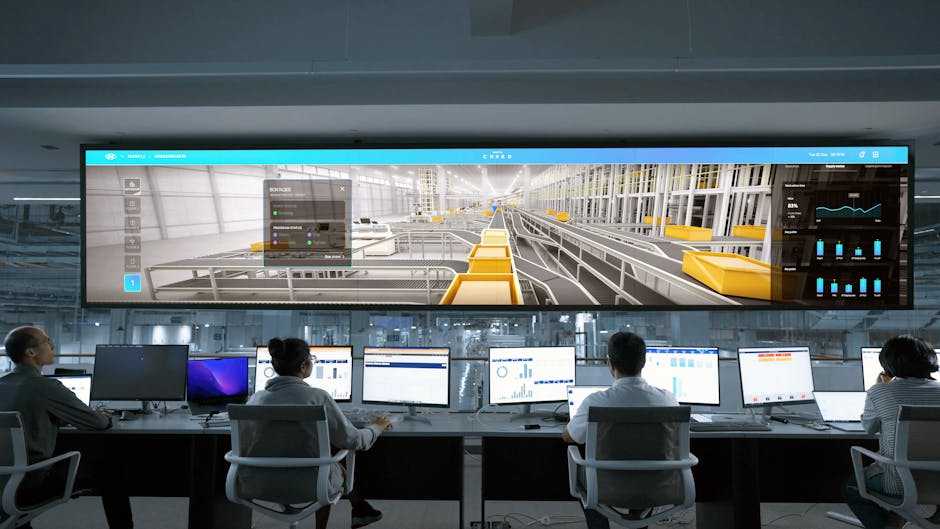
Supply Chains: Real time tracking, demand forecasting, and automated inventory management dramatically reduce inefficiencies.
Customer Service: AI chatbots and voice assistants handle basic and complex inquiries, improving speed and satisfaction.
Predictive Analytics: Marketing teams, operations leaders, and finance departments alike are leveraging AI to anticipate trends, prevent issues, and sharpen competitive insights.
Looking Ahead
By 2026, AI is not a plug in it’s a core organizational pillar. Businesses that successfully transform into AI first enterprises will see increased agility, adaptability, and market leadership.
Now is the time to evolve strategy, invest in intelligent infrastructure, and build cross functional AI fluency.
The Rise of Industry Specific Cloud Platforms
The era of one size fits all cloud services is winding down. Generic cloud is giving way to vertical SaaS platforms industry specific software built with the unique needs of sectors like healthcare, manufacturing, finance, and logistics baked in from the start. Companies are making the shift not just for convenience, but for survival.
Industry specific cloud solutions deliver ecosystems, not just features. Think compliance ready infrastructure for biotech. Plug and play integrations for supply chain operators. Tools that speak the native language of your field, down to terminology, workflow logic, and real time data pipelines. That removes complexity and makes onboarding smoother. It also cuts down on costly customizations that generic platforms often require.
The payoff? Higher operational efficiency, tighter security, and faster regulatory alignment. With threats growing and oversight rising, tailored platforms are stepping in where general tools fall flat. For businesses looking to stay competitive and stay out of trouble vertical SaaS isn’t a luxury. It’s the new baseline.
Data Culture Becomes a Competitive Edge
The conversation has shifted. Businesses no longer ask, “Why should we use data?” The new question is, “How fast can we get it, and how fast can we act on it?” In 2026, competitive advantage comes down to speed and relevance. Static dashboards and end of quarter reports are done. Real time insights are now the bare minimum.
Enter action systems platforms that don’t just track performance metrics but automatically trigger decisions, alerts, or even interventions across workflows. The best systems talk to each other and respond without waiting for middle management to manually pull the strings. It’s fast, it’s fluid, and it’s where the winners are operating.
But tools alone don’t flip the switch a true data culture means equipping every employee with the mindset and skill set to use data confidently. From frontline staff to C suite execs, today’s leaders are flattening the analytics curve and making data literacy part of every role. The companies that get this right don’t just react faster they think faster, build better, and adapt before the market demands it.
Cybersecurity by Design
Security is no longer a bolt on feature it’s baked into every layer of digital transformation. In 2026, zero trust architecture is the new ground level. That means assume nothing, verify everything. Every user, device, and connection is treated as if it could be compromised. It’s not about building a wall around your systems anymore; it’s about controlling access inside every room.
AI is taking a front row seat in threat detection. Instead of waiting for threats to surface, businesses are leaning on adaptive, AI driven security systems that learn as they go spotting anomalies, flagging risks in real time, and adjusting defenses without human lag. This isn’t futuristic, it’s table stakes. The smarter the threat, the smarter the defense needs to be.
Compliance? It has to be everywhere. Regulations aren’t slowing down, and trying to tack on standards after launch is a fast way to fall out of bounds. Forward thinking companies are designing their systems to meet compliance from day one. It’s less about checking boxes, more about building systems right the first time.
Security in 2026 isn’t a patch job. It’s the blueprint.
Human + Machine Collaboration
Smart companies aren’t replacing people they’re upgrading them. In 2026, the most effective teams won’t look like rows of cubicles or disconnected Zoom tiles. They’ll be combinations of humans and intelligent systems, working side by side. Think marketers testing dozens of creative angles in seconds. Finance teams partnering with algorithms to spot risk in real time. Ops leaders seeing bottlenecks before they even appear.
But it’s not just about speed. It’s about redesigning workflows so that humans do what they’re best at strategy, empathy, creativity while machines handle the heavy lift. This shift doesn’t just boost productivity. It redefines what a productive team even looks like.
Which brings us to the human side: upskilling. As systems grow smarter, people need to grow with them. Data fluency, prompt mastery, AI aided decision making these are no longer nice to haves. Businesses that invest in developing their people at scale will get long term returns. Those that don’t? They’ll spend more time catching up than innovating.
Human + machine isn’t the future. It’s the new normal. And the winners will be those who design for it, not just react to it.
Sustainability Centric Tech Investment
By 2026, sustainability and digital transformation won’t be two separate conversations. They’re merging, fast. ESG goals are no longer sidebar initiatives they’re being hardwired directly into technology roadmaps. Forward thinking companies are designing digital systems that support environmental priorities from the ground up.
That starts with Green IT. Energy intensive data infrastructure can sink emissions targets. So, businesses are optimizing server loads, investing in efficient cooling, and moving toward carbon aware cloud providers. It’s not just about performance anymore it’s about impact.
Then there’s transparency tech. Real time emissions tracking, blockchain for supply chain accountability, and AI that identifies waste points are moving from experimental to operational. Customers want receipts, regulators demand proof, and shareholders are watching.
Sustainability used to be a PR boost. Now, it’s a requirement baked into tech strategy and a filter for every digital investment moving forward.
Why 2026 Isn’t the Future It’s the Deadline
The digital divide is no longer theoretical it’s a widening trench. On one side, digitally mature businesses are scaling AI, automating workflows, and embedding data into every touchpoint. On the other, organizations are still drafting transformation strategies they won’t act on until it’s too late. Planning time is over. Execution is the new difference maker.
Leaders aren’t waiting for perfect roadmaps they’re iterating in real time. While some companies debate cloud versus on prem, others are already pushing vertical SaaS across departments. While late adopters scramble to centralize data, the front runners are turning insight into instant decisions.
The takeaway? Every delay increases the distance between you and your competitors who’ve already gone digital. No more workshops, whiteboards, or wait and sees. The businesses that win 2026 are building momentum right now.
Need help getting unstuck? Start with the full digital transformation guide for practical steps that bridge the gap between strategy and impact.
No More Optional
Digital transformation isn’t about gaining a competitive edge anymore it’s about staying relevant. The tools, platforms, and workflows that were once considered nice to have are now the bare minimum for survival. Customers expect immediacy. Markets shift fast. Tech is no longer one line item in a business model it is the business model.
Companies that hesitate are already falling behind. And by 2026, the gap between early adopters and the laggards won’t just be wide it’ll be irreversible. While one set of firms automates, personalizes, and scales with ease, others will still be debating if the cloud makes sense. There’s no cushion left for indecision.
If your organization is still talking about transformation like it’s some future milestone, it’s time for a reality check. Leaders aren’t planning anymore; they’re executing. The clock’s ticking.